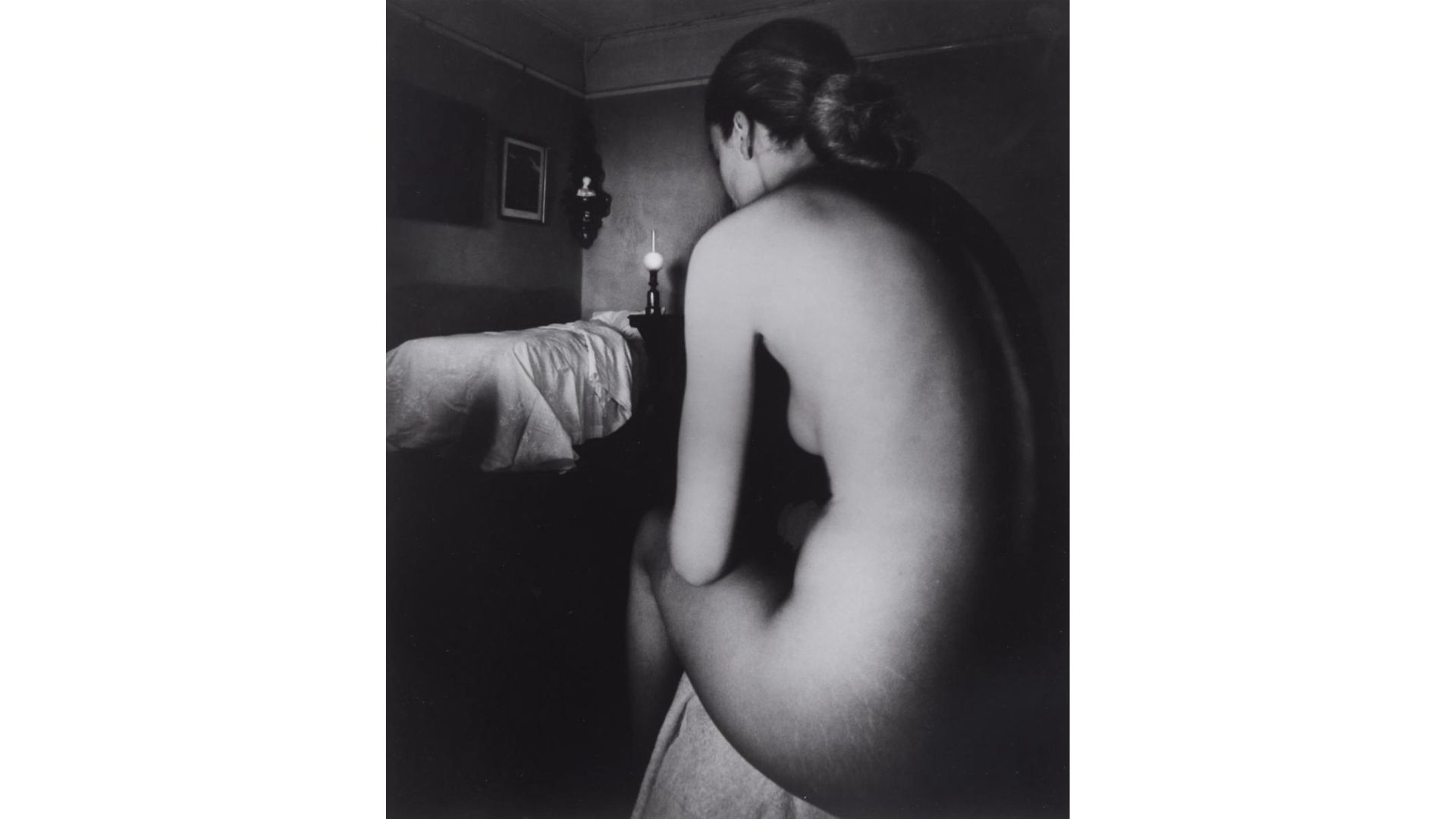
Bill Brandt (1904–1983) was an influential British photographer, born in Hamburg to an English father and a German mother. Following the rise of Nazism and his experiences during World War I, he renounced his German origins, claiming instead to have been born in London.
In the 1920s, he stayed in Davos to recover from tuberculosis, a period during which he began to develop an interest in photography. In 1927, he moved to Vienna, where, thanks to Eugenie Schwarzwald, he came into contact with prominent figures such as Ezra Pound and Man Ray, who had a profound influence on his visual language.
In 1930, he worked in Paris alongside Man Ray, entering the Surrealist environment and developing a style characterized by bold compositions and strong technical experimentation. His early work also shows the influence of Eugène Atget.
In 1934, he settled in London, adopting Britain as both his home and his main artistic subject. His photographs explore British society, social contrasts, and urban life, with a particular focus on night photography.
Bill Brandt (1904–1983) è stato un influente fotografo britannico, nato ad Amburgo da padre
inglese e madre tedesca. In seguito all’ascesa del nazismo e alle esperienze vissute durante la
Prima guerra mondiale, rinnegò le sue origini tedesche, dichiarando di essere nato a Londra.
Negli anni ’20 soggiornò a Davos per curare la tubercolosi, periodo durante il quale iniziò ad
avvicinarsi alla fotografia. Nel 1927 si trasferì a Vienna, dove grazie a Eugenie Schwarzwald
entrò in contatto con figure di rilievo come Ezra Pound e Man Ray, che influenzò profondamente
il suo linguaggio visivo.
Nel 1930 lavorò a Parigi accanto a Man Ray, entrando in contatto con l’ambiente surrealista e
sviluppando uno stile caratterizzato da inquadrature audaci e forte sperimentazione tecnica. Le
sue prime opere risentono anche dell’influenza di Eugène Atget.
Nel 1934 si stabilì a Londra, adottando la Gran Bretagna come sua patria e principale soggetto
artistico. Le sue fotografie esplorano la società britannica, i contrasti sociali e la vita urbana, con
una particolare attenzione alla fotografia notturna. traduci