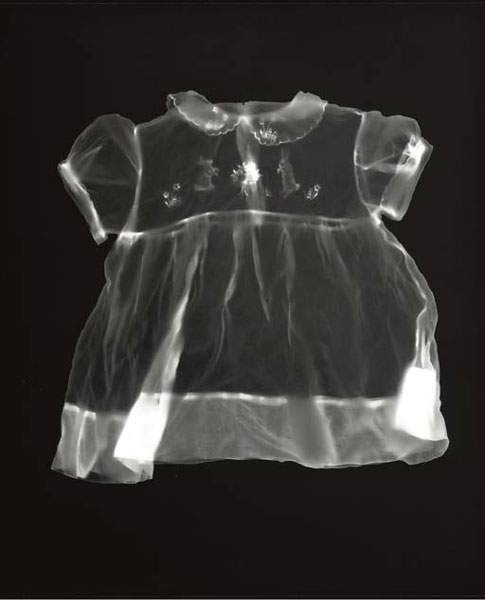
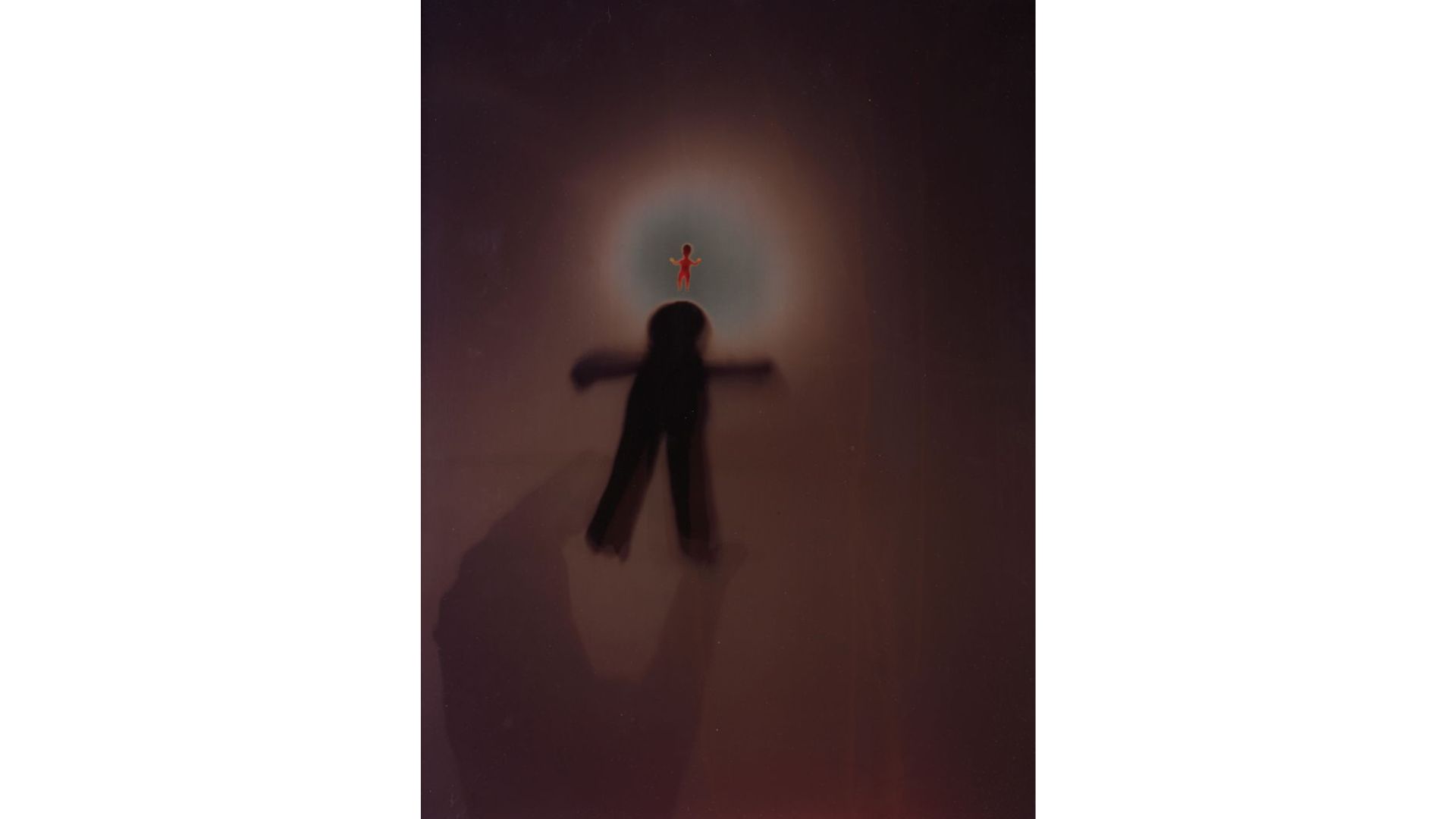
Adam Fuss is a contemporary photographer, originally from Britain, celebrated for his unconventional and experimental approach to the photographic medium. Over the course of his career, he has focused on refining cameraless photography, working with its most fundamental components: objects, light, and photosensitive surfaces. His practice is marked by a modern reimagining of photography’s earliest methods, including the daguerreotype—which yields a unique image—and the photogram, where objects are placed directly onto light-sensitive material and exposed to light, resulting in luminous and often poetic imagery.
Born in London in 1961 and raised in Australia, Fuss began his career in 1980 as a photographic apprentice at the Ogilvy & Mather Agency. In 1982, he relocated to New York City, where he started experimenting with pinhole photography, using it as a way to engage with historical photographic techniques. His early work received critical recognition, and not long afterward, he moved away from using the camera altogether. Fuss went on to revitalize cameraless photography, drawing inspiration from early modernist figures of the 1920s such as László Moholy-Nagy and Man Ray.